Features
Every feature in BackyardPace exists because the race format demands it. Here's what it does and why it matters.
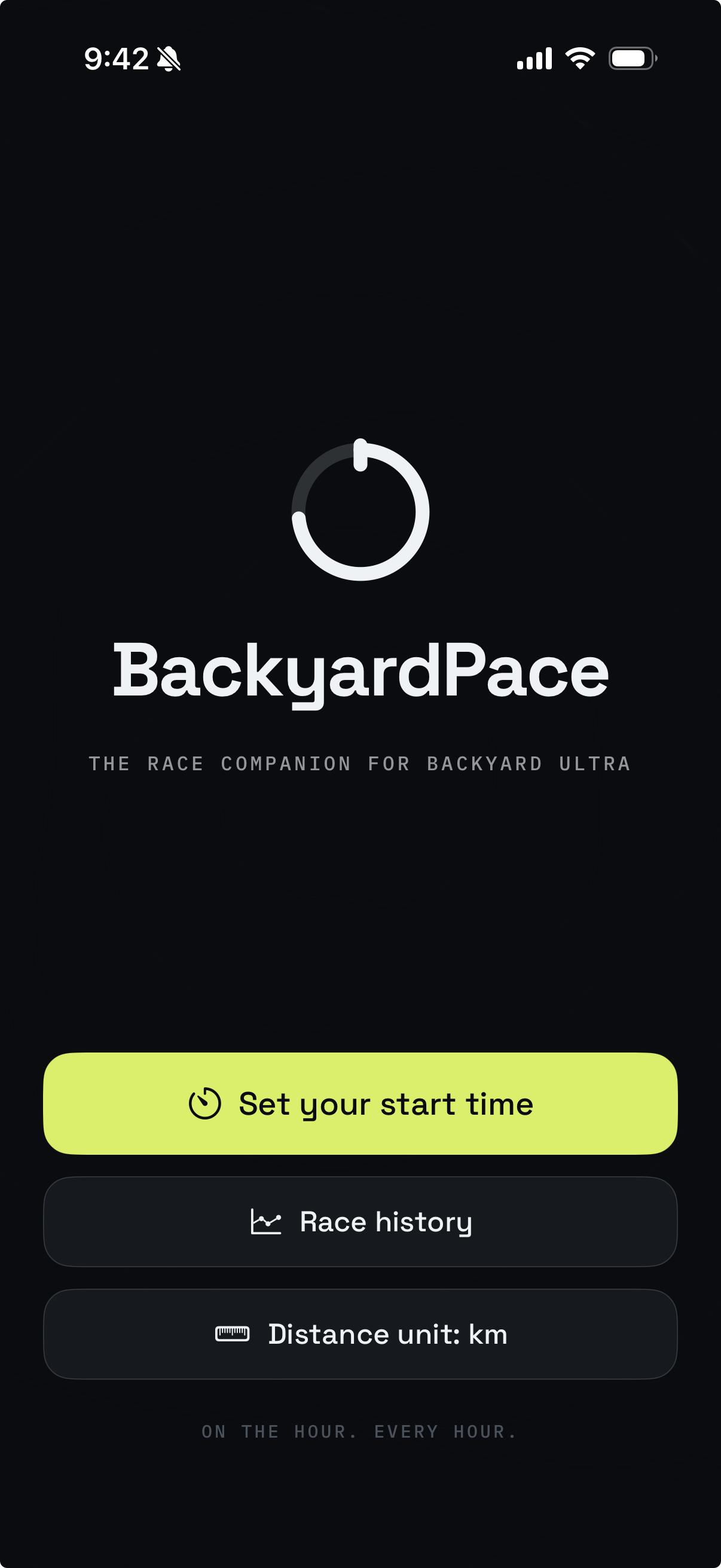
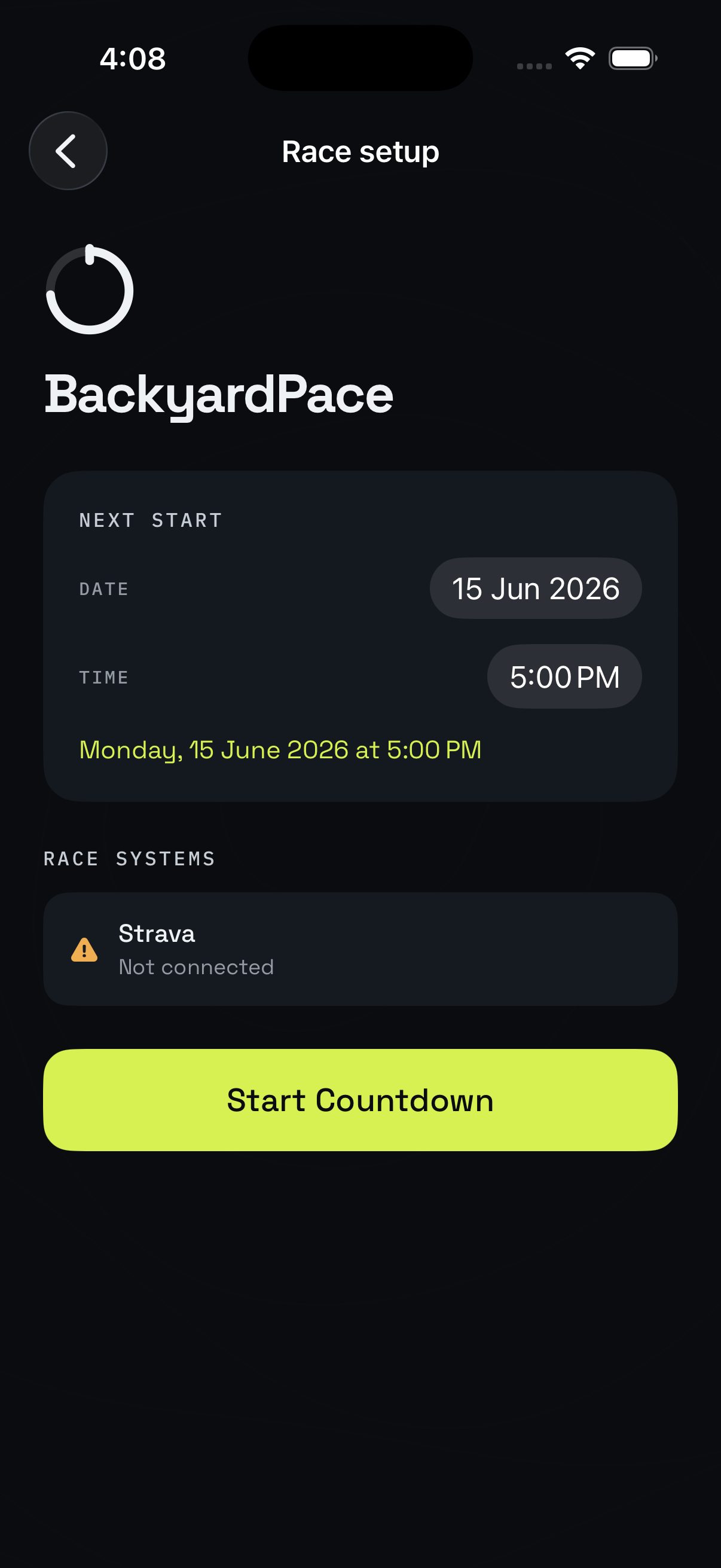
Before the race starts, you enter one thing on the phone: your scheduled start time.
That's the entire setup. BackyardPace derives every countdown, lap start time, and recovery window from that single value. There's no ongoing configuration. No manual lap restarts. No timer you can accidentally pause.
The schedule is sent to your watch. Once that's done, the phone can go in a bag.
Most running apps treat the Apple Watch as a companion to a phone. BackyardPace inverts this. The watch is the race engine. The phone is for setup, crew tent dashboard, and post-race review.
This matters because phones get left in tents, run out of battery, and drop connectivity. BackyardPace keeps the race running on the watch regardless of what happens to the phone.
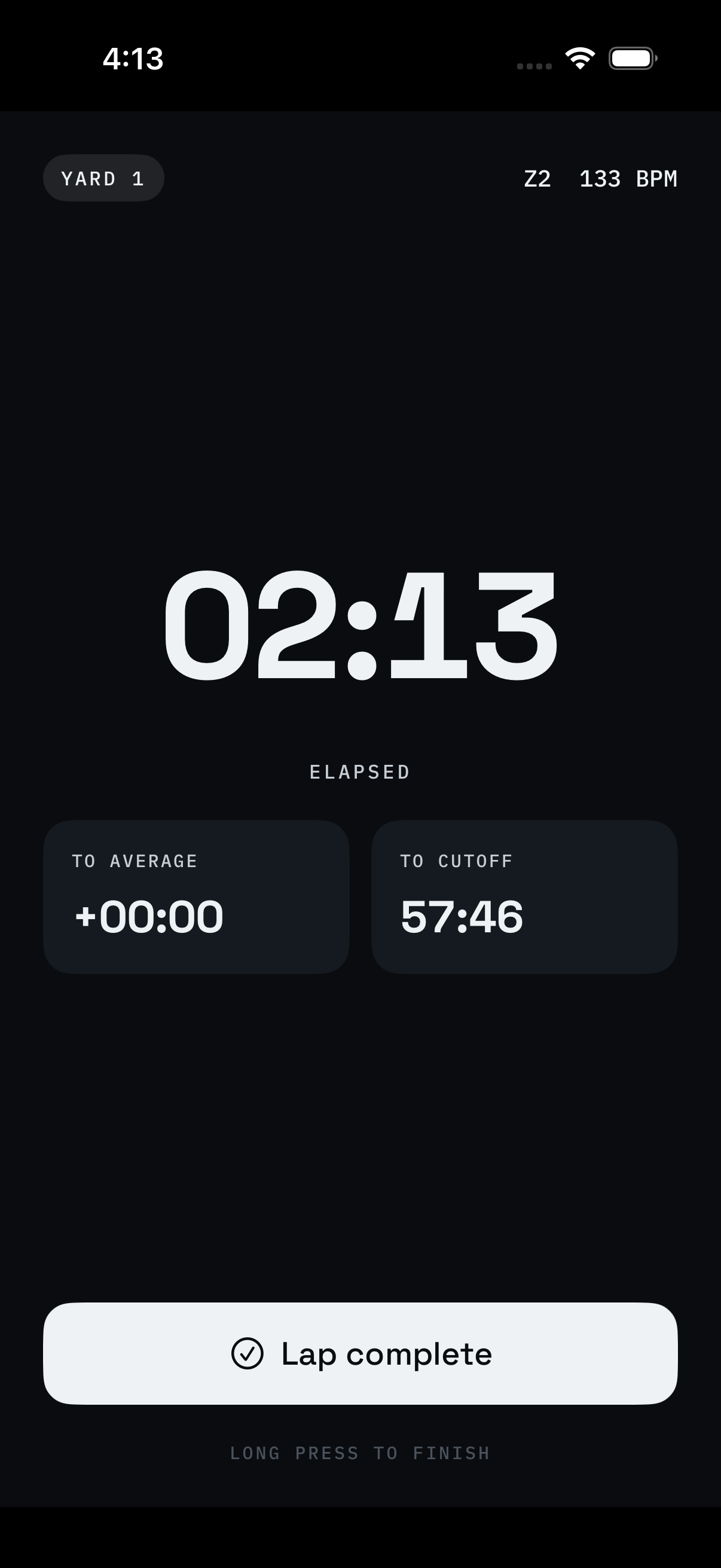
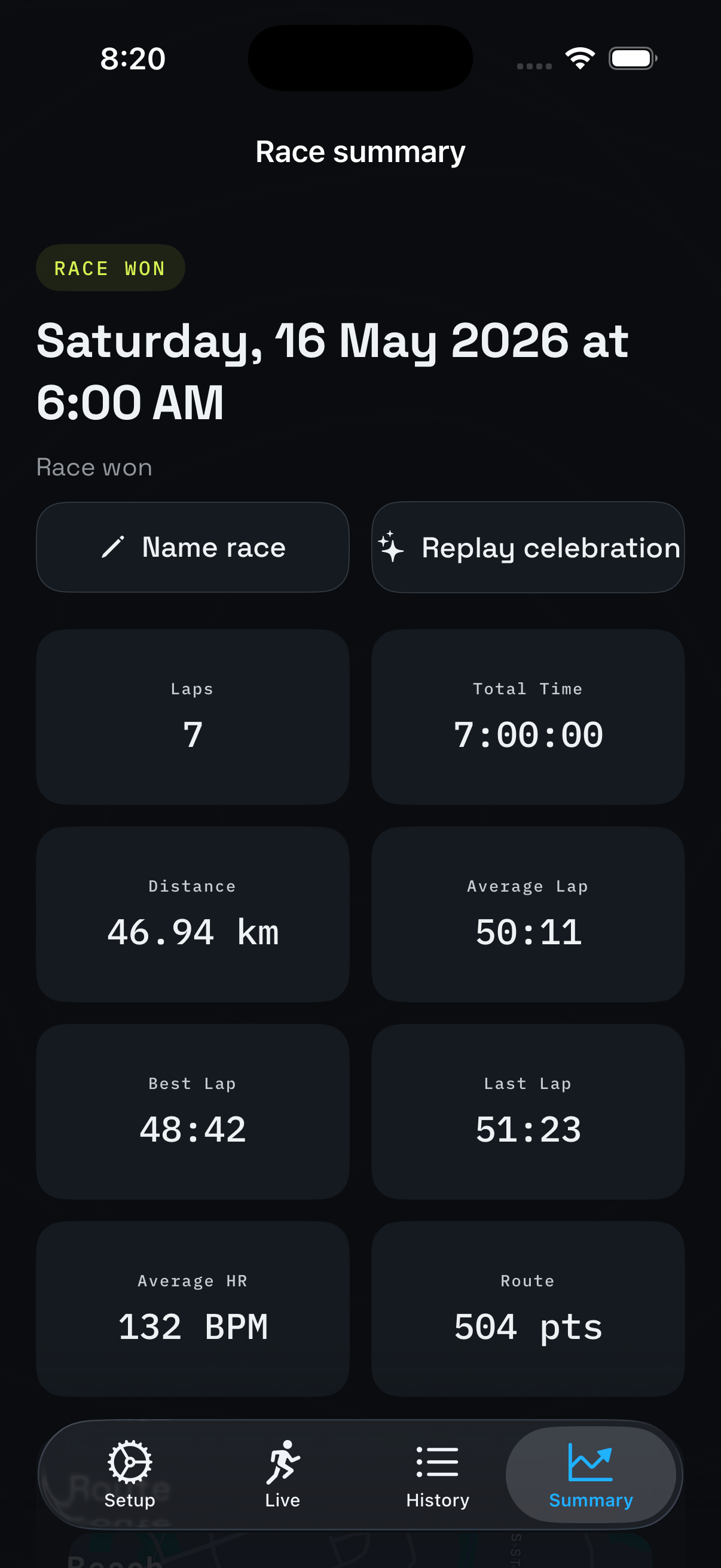
Your crew can use the phone dashboard to track each lap, view lap time trends, and see how much buffer the runner has before the cut-off. Real data, at the tent, when it matters most.
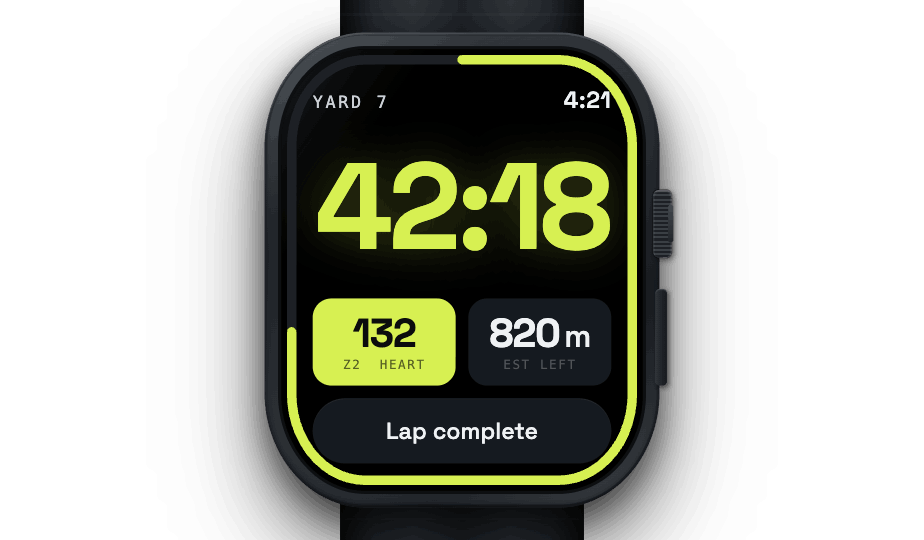
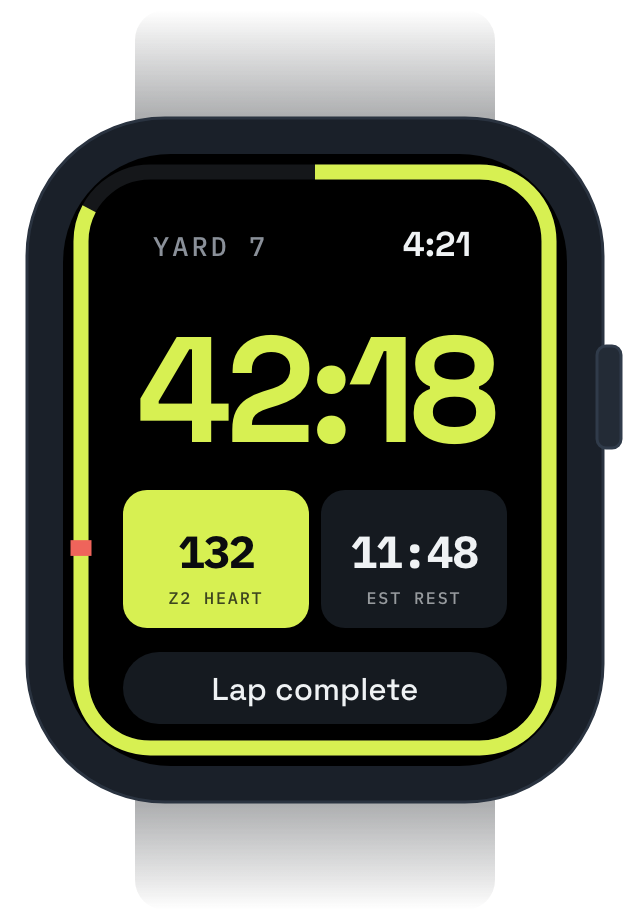
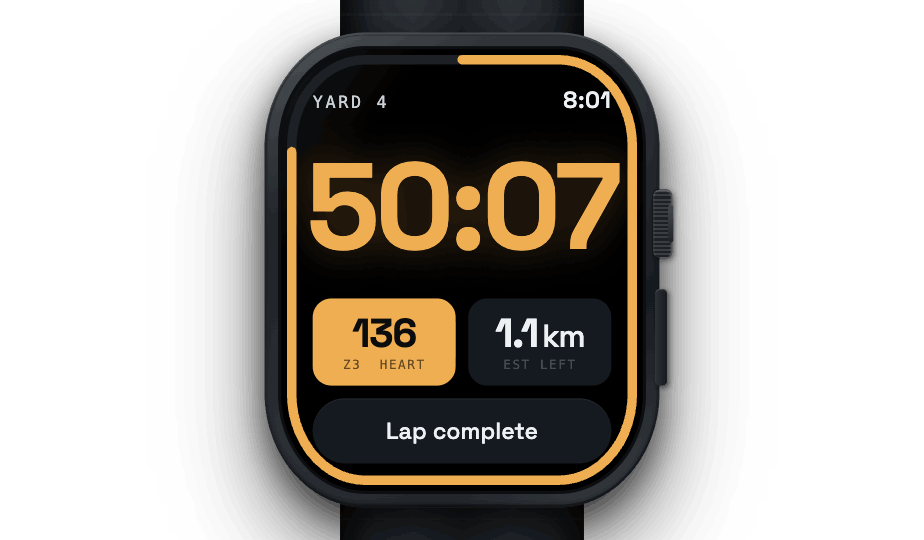
The watch displays the current lap time, elapsed time since the loop started, and time remaining in the current lap window. Simple. Always accurate. Always derived from the scheduled start, not a running timer.
When you finish a lap, tap Lap Done. BackyardPace records the time and transitions immediately to recovery mode.
Finishing a lap and not knowing how long you have to recover is one of the small anxieties that adds up over a long race. BackyardPace removes it entirely.
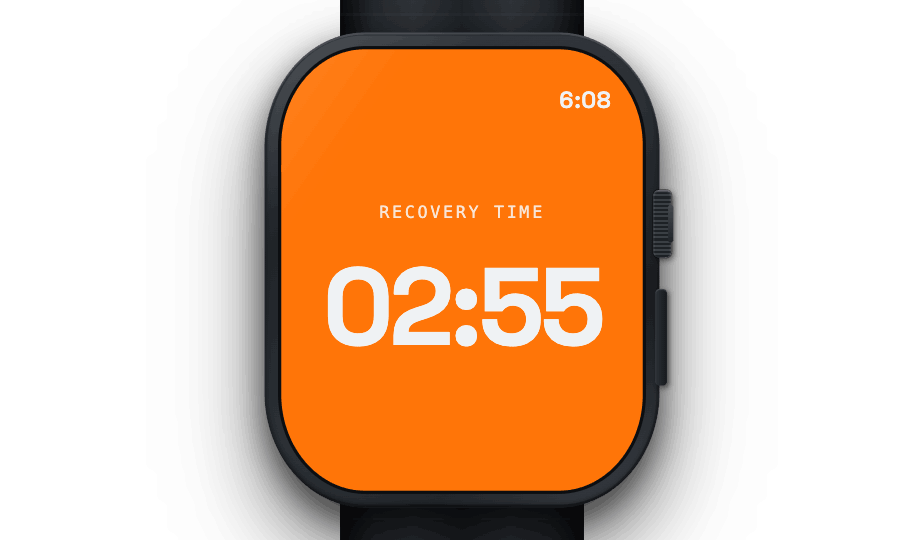
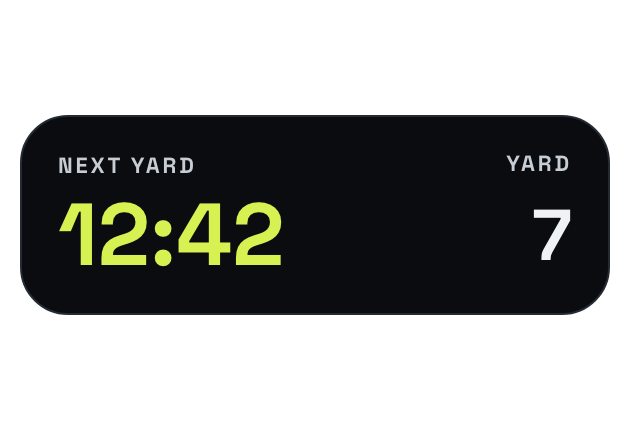
As soon as you tap Lap Done, the watch shows your remaining recovery window: the exact number of minutes and seconds until the next lap begins. Eat, rest, sort your kit, and watch the number count down.
As the window closes, the watch warns you. Three bells at 3 minutes to go. The countdown turns amber at 2 minutes. Red at 1 minute. Time to get to the start line.
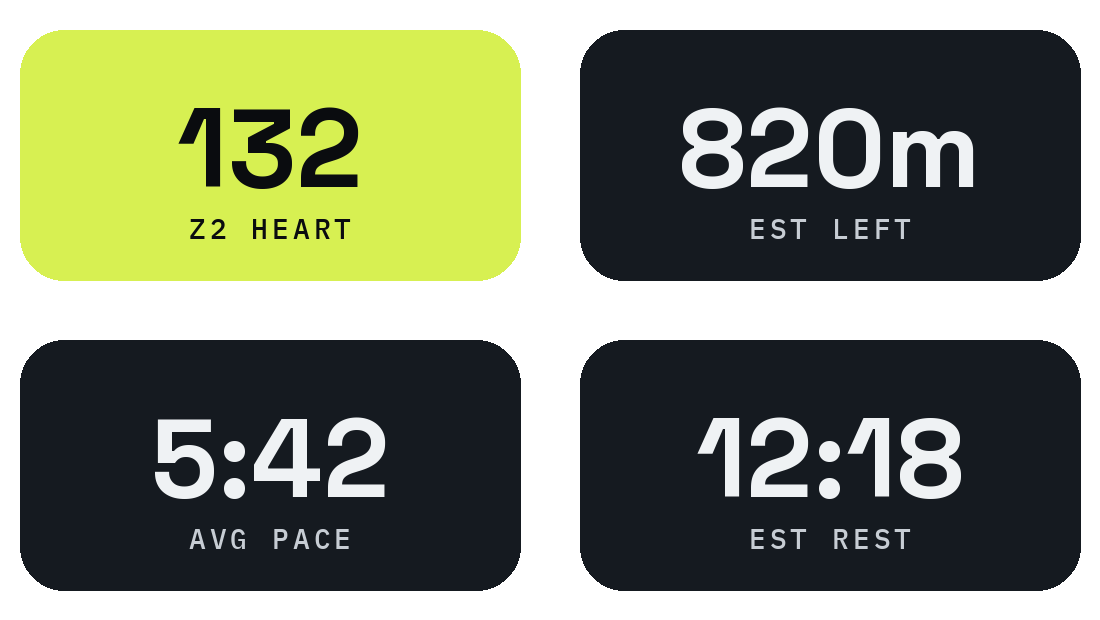
Heart rate is tracked continuously during every lap and displayed on the watch face. As the hours and laps stack up, understanding your effort level becomes more important, not less.
Heart rate data is also saved as part of the workout record to Apple Health, giving you a full picture of the race afterwards.
GPS is recorded directly from the Apple Watch throughout the race. The route is stored and visible in Apple Maps after the event: a full trace of every loop you completed.
No phone needed for GPS. The watch handles it independently.
When you stop the race, the full workout is saved automatically to Apple Health and Apple Fitness. This includes GPS, heart rate, duration, laps and distance.
Your Backyard Ultra appears in Apple Fitness alongside every other workout in your history — properly recorded, not a workaround.
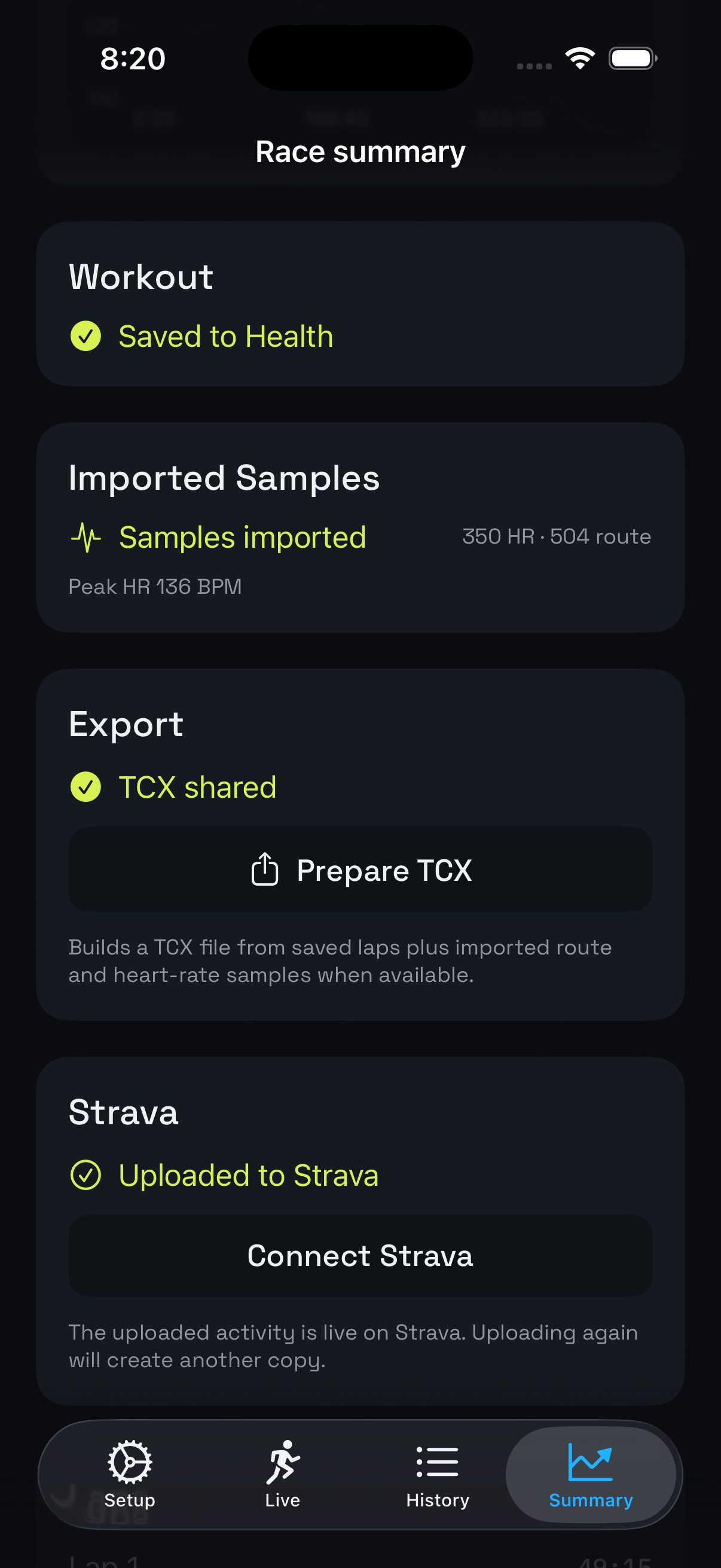
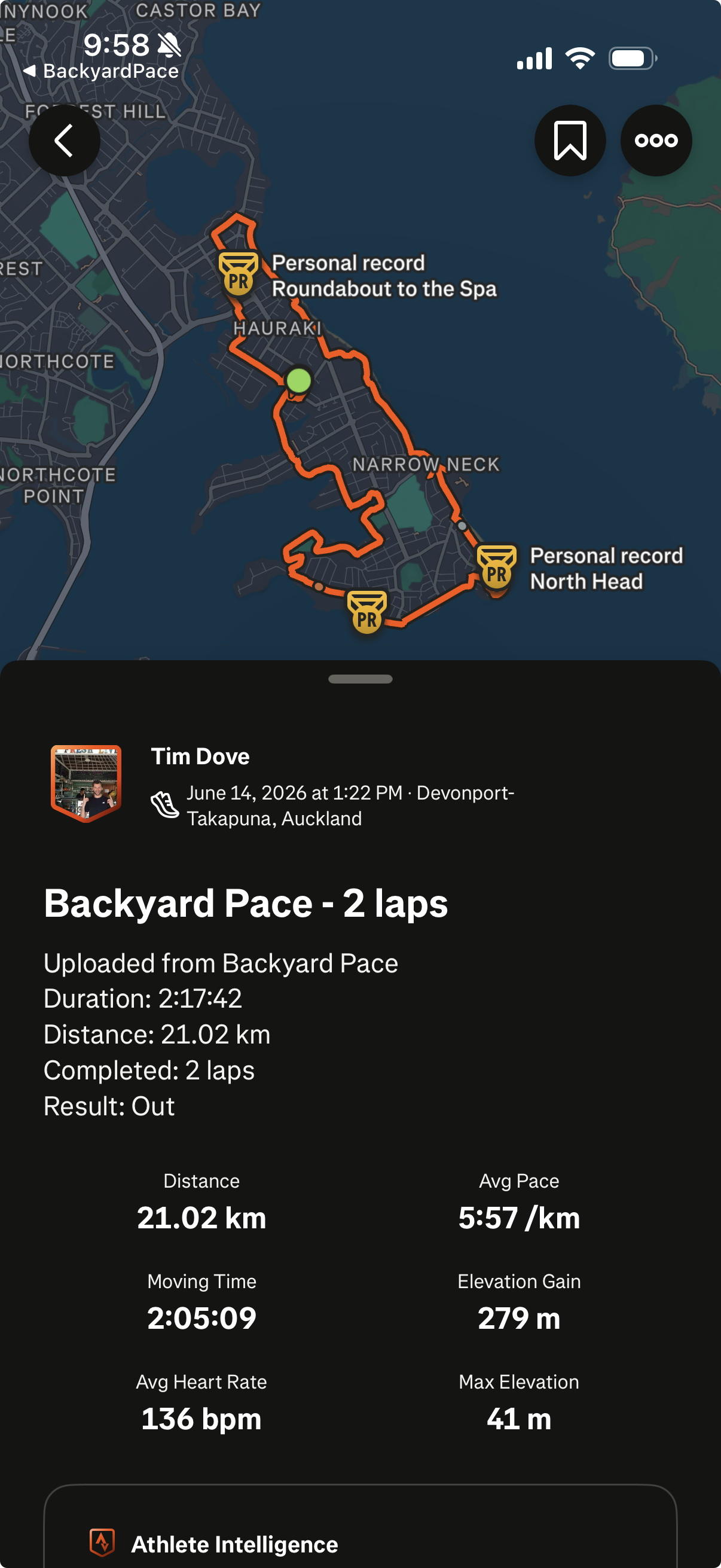
Connect your Strava account once, then upload straight from the race summary when you finish. BackyardPace builds a standard TCX file with GPS, heart rate, and each yard recorded as its own lap.
That lap structure is the whole point. A Backyard Ultra viewed as one continuous blob tells you nothing. Yard by yard tells you the story of your race: where you were comfortable, where it started slipping, and what you had left at the end.
You can also tap Share TCX to save the file and upload it yourself, which works whether or not you have connected Strava.
BackyardPace lets you choose your preferred unit of measurement. Switch between kilometres and miles and every distance reading across the app and watch updates automatically.
Whether your race uses km markers or mile markers, BackyardPace speaks your language — and syncs the setting across phone and watch so there's no mismatch mid-race.
BackyardPace has a pacing engine that tracks your lap times and calculates your average pace across completed laps. The goal is to show you simply and clearly whether your current lap is ahead of, behind, or on pace with your recent average.
In the later hours of a Backyard Ultra, this becomes critical information. The pacing engine is built. Wiring it into the race screen is next.
BackyardPace is built for Apple Watch right now. Every feature — lap timing, recovery countdowns, GPS tracking, heart rate, Strava upload — works on Apple Watch Series 4 and newer.
Garmin is the most-requested platform and is actively being scoped. A lot of Backyard runners race on Garmin — the Fenix series in particular — and the format demands exactly the same thing from a Garmin watch as it does from an Apple Watch. The plan is to bring the same core race engine to Garmin once the Apple Watch version is stable and out in the world.
If you run on Garmin, Coros, Suunto or another platform: join the waitlist and select your watch. It directly influences what gets built and when. The more Garmin runners on the list, the faster Garmin happens.
Apple Watch now. More platforms coming.
Apple Watch beta opens mid-2026. Garmin and other platforms are on the roadmap. Register your watch when you sign up and we'll reach out when your platform is ready.
Download on the App Store